
Education, Art and Reconciliation with Carla Arsenault & Vivek Saxena
Carla Arsenault and Vivek Saxena speak with Nancy Regan about education, Indigenous student support, Mi’kmaw culture, and reconciliation through action at Nova Scotia Community College.
Recorded at the Friends United International Convention Centre in Unama’ki, Cape Breton, this conversation reflects on how art, listening, student services, Elders, and everyday responsibility can help create more welcoming spaces for Indigenous and non-Indigenous communities.
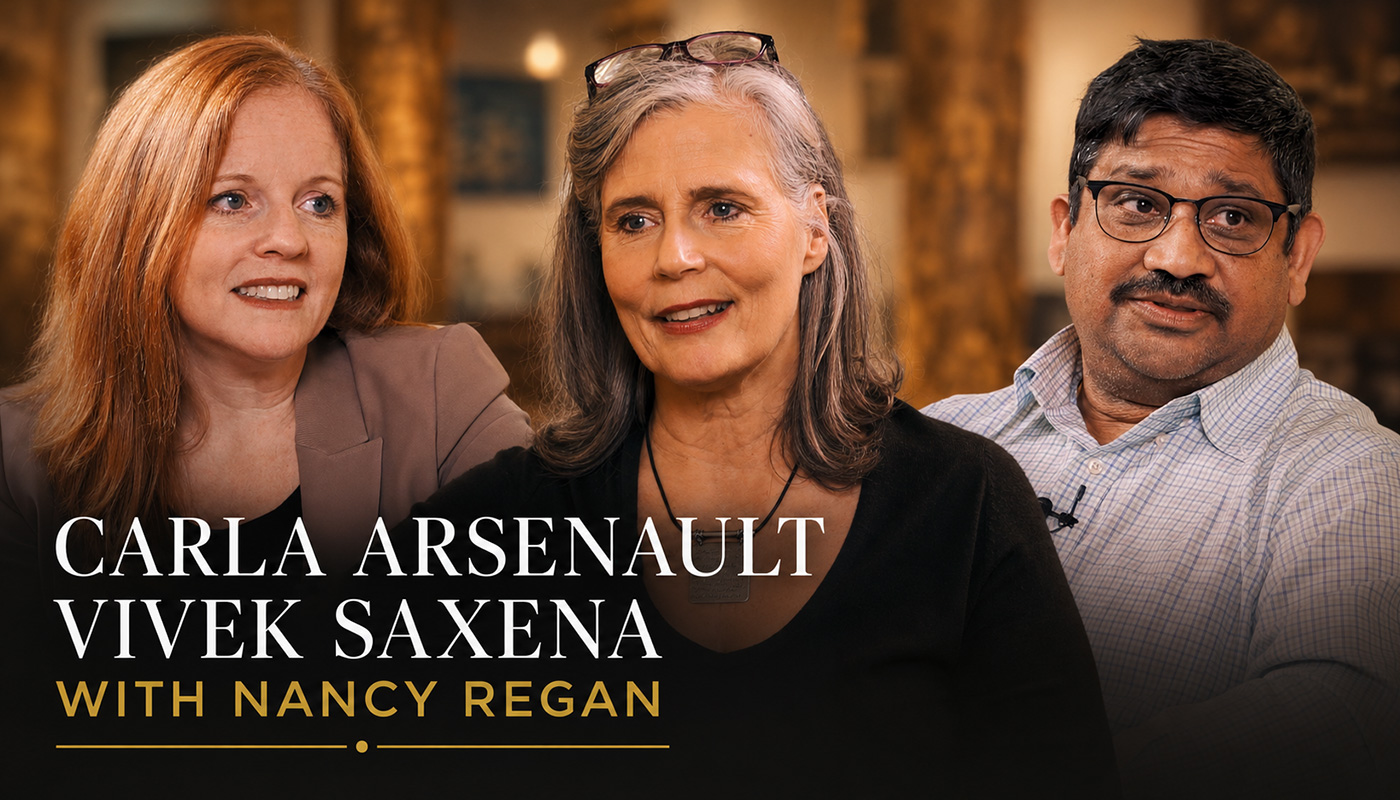
Video: 30 minutes, English – Watch on YouTube
A Conversation About Education, Art, and Reconciliation
This Friends United interview explores how education, art, listening, and community relationships can support reconciliation in everyday life. In this conversation, Nancy Regan speaks with Carla Arsenault and Vivek Saxena about their connection to Friends United, their work at Nova Scotia Community College, and the importance of creating spaces where Indigenous students, staff, and visitors feel welcomed and respected.
Carla reflects on growing up in Cape Breton with limited education about Indigenous peoples and culture, and on the responsibility she now feels as a parent, educator, and college principal. Vivek shares his perspective as someone who came to Canada from India and later learned more deeply about the history of residential schools, colonialism, and the relationship between Indigenous and non-Indigenous peoples in Canada.
Art as a Welcoming Presence
A central theme of the interview is the role of Mi’kmaq art in educational and professional spaces. Carla and Vivek describe how artwork connected to Friends United and Rolf Bouman has become a focal point for conversation, learning, pride, and welcome. Rather than being decorative alone, the art opens the door to questions, stories, and a deeper understanding of Mi’kmaw culture.
At NSCC spaces such as the Strait Area Campus and the Marconi campus, Indigenous artwork is described as a visible sign of respect and belonging. Vivek explains how Mi’kmaq students can feel more at home when they see their culture represented, while non-Indigenous students and visitors are invited to learn and ask questions.
Listening, Learning, and Student Support
The conversation also looks at reconciliation within education. Carla and Vivek speak about Indigenous student advisors, Indigenous counsellors, Elders on campus, smudging spaces, designated seats for Indigenous students, programs delivered in community, and the importance of making college spaces more accessible and supportive.
Vivek emphasizes that reconciliation cannot simply be decided by institutions on behalf of Indigenous communities. It requires listening, learning, and including Indigenous voices at the table. Carla adds that every person who walks through the doors of an educational institution presents an opportunity for learning, understanding, and change.
From Words to Action
A key message of the interview is that reconciliation must move beyond statements and land acknowledgements. Vivek reflects that acknowledging being on unceded Mi’kmaw territory must be translated into action. Carla speaks about the individual responsibility of parents, educators, leaders, and community members to continue learning and to influence change wherever they can.
Together, the conversation shows reconciliation as something that happens through education, policy, relationships, art, student support, honest reflection, and daily choices.
In this conversation
- Carla Arsenault and Vivek Saxena discuss their connection to Friends United and Rolf Bouman.
- The interview explores how Mi’kmaq art creates welcoming educational spaces.
- Carla reflects on growing up in Cape Breton with limited exposure to Indigenous education.
- Vivek shares his perspective as a newcomer to Canada learning about residential schools and colonial history.
- The conversation highlights Indigenous student advisors, counsellors, Elders, and smudging spaces at NSCC.
- Carla and Vivek discuss designated supports and programs for Indigenous students.
- The interview considers how education can help Canadians better understand reconciliation.
- Vivek emphasizes listening, learning, and including Indigenous voices in decision-making.
- Carla speaks about responsibility as a parent, educator, and college principal.
- The conversation closes with hope, action, and the importance of every person doing their part.
People and context
Video information
Series: Second Annual Reconciliation Talks
Title: Carla Arsenault & Vivek Saxena on Education, Art and Reconciliation | Friends United
Interview with: Carla Arsenault & Vivek Saxena with Nancy Regan
Language: English
Length: 30 min. 34 sec.
Location: Friends United International Convention Centre, Unama’ki, Cape Breton, Nova Scotia, Canada
YouTube URL: Watch the Video on YouTube
Published: May 25, 2023
Main topics: Education, reconciliation, NSCC, Indigenous student support, Mi’kmaq art, Elders on campus, Cape Breton, listening, residential school history, community responsibility
Chapters: Welcome and Hope, Support for Students, From Words to Action, Reconciliation Talks Begin, Carla Finds the Center, Vivek Meets Rolf, Art That Welcomes, Art as Reconciliation, Growing Up Without Education, NSCC Reconciliation Initiatives, What Elders Do on Campus, A Newcomer’s Perspective, A Canadian’s Reckoning, Turning Shame Into Change, Everyone’s Responsibility, Hopeful Closing Reflections, Final Thanks and Farewell