
Indigenous Art in Public & Institutional Spaces
Friends United brings Indigenous art into public and institutional spaces across Nova Scotia — from airports, courts and federal institutions to workplaces and other places people encounter in everyday life. These projects create opportunities for Indigenous artists and their work to become a visible and meaningful part of shared environments.
Bringing Indigenous Art into Shared Spaces
Through collaborations with public institutions, organizations and community partners, Friends United has helped bring Indigenous artwork into environments far beyond traditional gallery settings.
Some projects have become long-term installations, while others were created for particular initiatives or public occasions. Together, they show the many ways Indigenous art can become part of places where people travel, work, meet and interact with their communities.
The projects presented here as examples include installations and collaborations with organizations across Nova Scotia, each shaped by its own setting, purpose and relationship with the artists involved.
Indigenous Art at Halifax Stanfield International Airport
In 2022, Friends United helped bring the artwork of Mi’kmaq artist Loretta Gould into one of Atlantic Canada’s most visible public spaces.
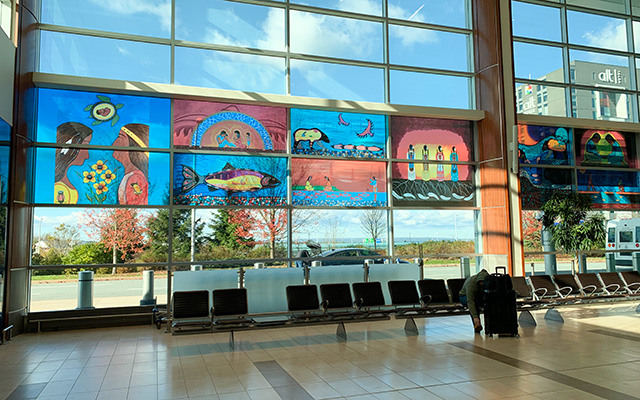
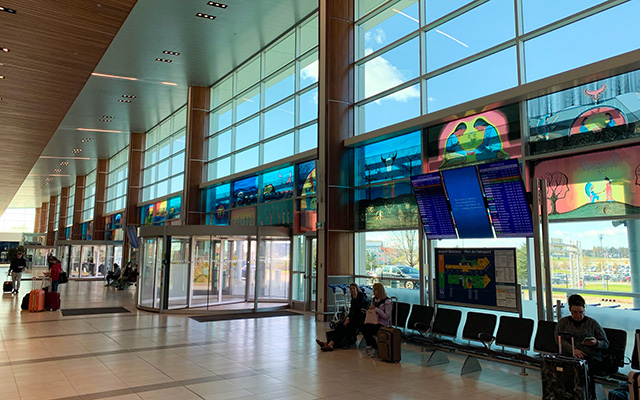
Twenty-four of Gould’s images were transformed into a large-scale installation across the windows of Halifax Stanfield International Airport in Halifax, Nova Scotia. Integrated into the terminal environment, the colourful works are encountered by travellers arriving, departing and moving through the airport.
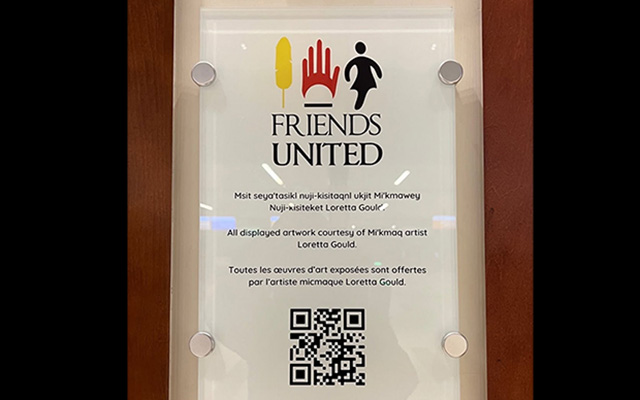
A Friends United plaque at the installation credits the displayed artwork to Loretta Gould and presents the information in Mi’kmaq, English and French, directly connecting the artist, the artwork and Friends United within the public space.
The installation demonstrates how Indigenous art can become part of the architecture and everyday experience of a major transportation hub.
Learn more about Loretta Gould
View the 2022 Halifax Stanfield feature
Indigenous Art at the Wagmatcook Provincial Court
In 2018, Friends United artists contributed artwork to the new Provincial Court in Wagmatcook First Nation, bringing Indigenous art into a legal environment created with reconciliation, restorative justice and community participation at its centre.
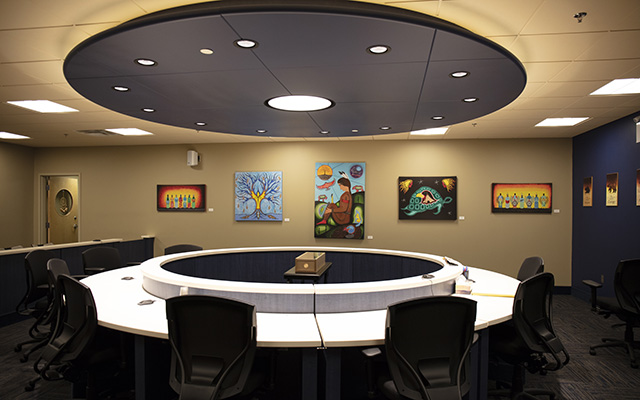
The Wagmatcook Provincial Court officially opened on National Indigenous Peoples Day, June 21, 2018, in the Donald Marshall Junior Centre for Reconciliation and Justice. The court includes both a Gladue Court and a Healing to Wellness Court and was developed in close consultation with First Nations communities, Elders and justice partners.
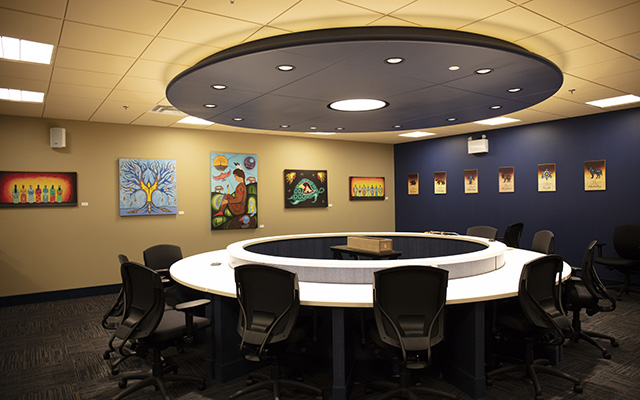
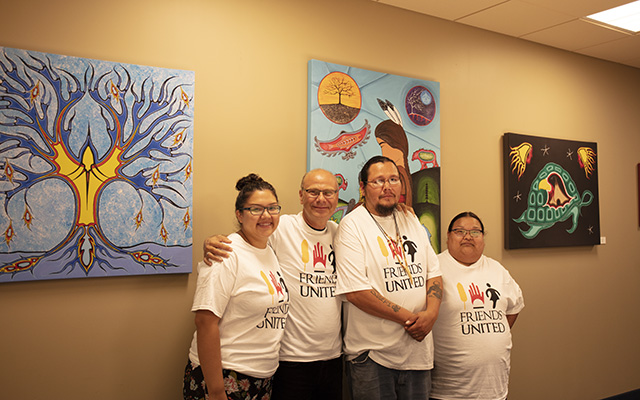
Friends United artwork became part of this distinctive setting. The paintings shown throughout the court contribute colour, cultural presence and Indigenous perspectives to a space whose circular courtroom design and restorative justice approach already reflect Indigenous traditions and values.
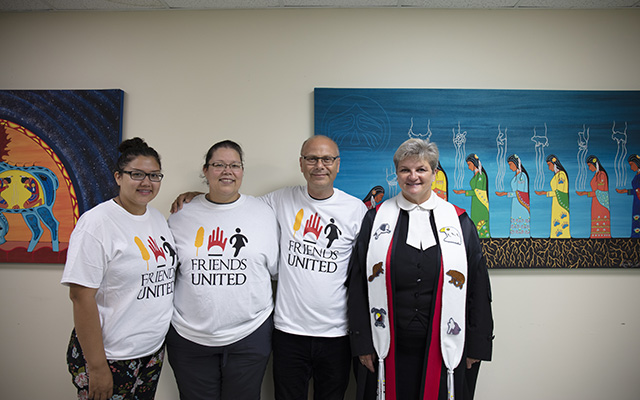
The installation included works by Friends United artists, with Amanda Julian, Darren Julian, Shianne Gould and Loretta Gould represented in the project. Friends United founder Rolf Bouman and Judge Laurie Halfpenny MacQuarrie are also documented in photographs connected with the installation.
For Friends United, the installation represented an important milestone: Indigenous artwork was not simply being presented in an exhibition, but becoming part of a working public institution in which justice, healing and reconciliation meet.
Related:
Read the Judges Chambers statement – Wagmatcook First Nation Court
Hear Patrick Lamey discuss the Wagmatcook courtroom and Indigenous art
Watch Rodney MacDonald discuss the Wagmatcook Court and its Indigenous artwork
Watch Danny Graham on Reconciliation, Restorative Justice & Trust
Watch Peter MacKay & Adam Rodgers on Reconciliation, Indigenous Justice & Art
Indigenous Art with the Canada Border Services Agency in Halifax, Nova Scotia
Friends United has also brought Indigenous art into a Canada Border Services Agency (CBSA) facility in Halifax, Nova Scotia, creating a visible Indigenous presence within a federal institutional environment.
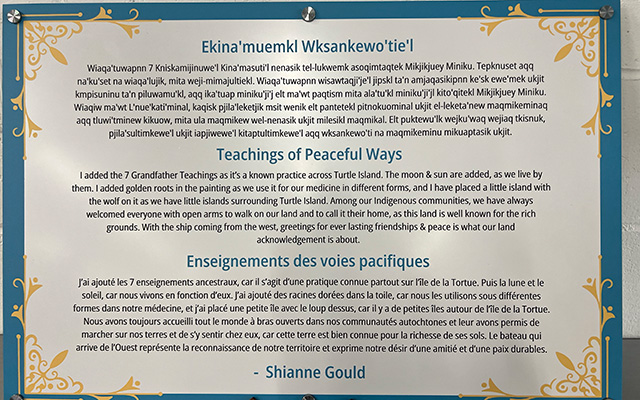
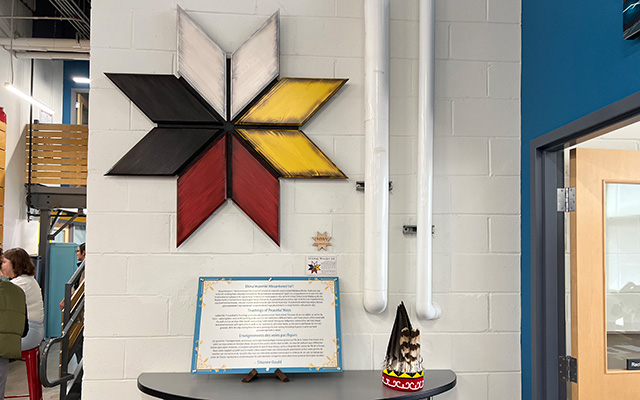
The installation combines Indigenous artwork with cultural elements and information that gives additional context to the works on display. A prominent part of the installation is “Teachings of Peaceful Ways” by Mi’kmaq artist Shianne Gould, presented in Mi’kmaq, English and French.
In her statement, Gould reflects on the Seven Grandfather Teachings, connections to Turtle Island, and traditions of friendship, peace and welcoming people to the land. Placing these teachings alongside the artwork adds a cultural and educational dimension to the installation.
By incorporating Indigenous art and perspectives into an everyday institutional setting, the project gives employees and visitors opportunities to encounter the artists, their work and the teachings connected with it as part of the environment around them.
Indigenous Art at the Canadian Coast Guard College
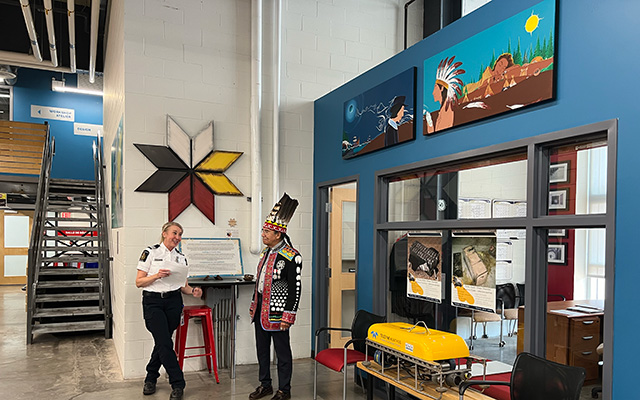
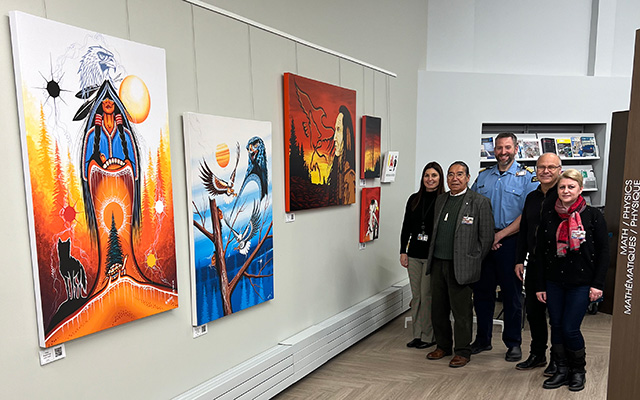
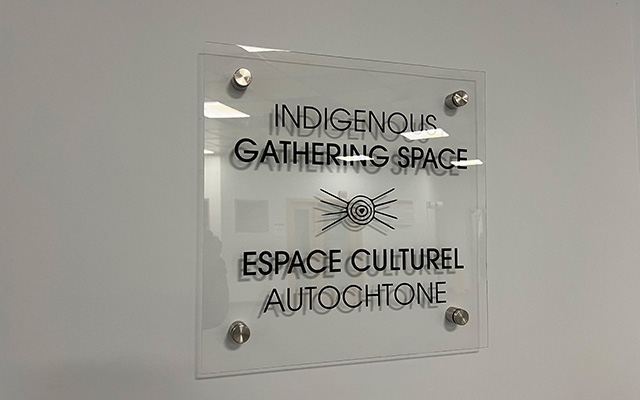
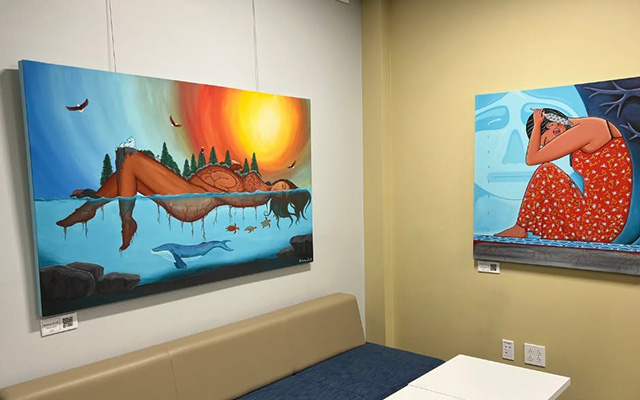
Friends United has also brought Indigenous artwork into the Canadian Coast Guard College in Sydney, Nova Scotia, where works by Indigenous artists are displayed within the College, including its Indigenous Gathering Space.
The installation creates a strong visual presence within the institution, bringing Indigenous art into spaces used by students, staff and visitors as part of their everyday environment. Works by Friends United artists including Gordon Fiddler, Darren Julian and Shianne Gould are accompanied by artist information and QR codes, providing additional context for visitors.
The project reflects the broader Friends United approach of placing Indigenous art in working public institutions, where it can be encountered outside traditional gallery settings and become part of the daily experience of the space. As an educational institution, the Canadian Coast Guard College also connects with Friends United’s broader work in schools and educational spaces.

Indigenous Art in RCMP Facilities Across Nova Scotia
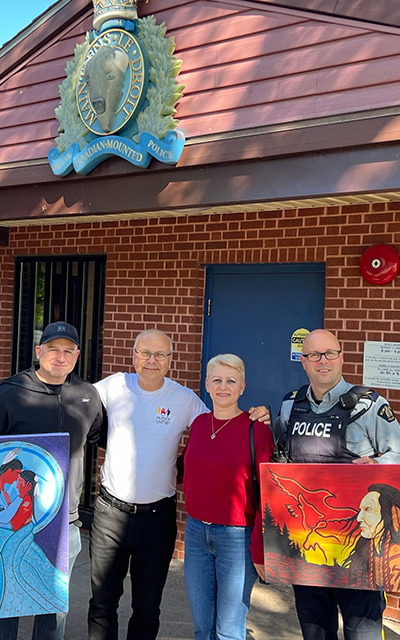
Friends United has developed an ongoing relationship with the Royal Canadian Mounted Police (RCMP) in Nova Scotia, including the placement of Indigenous artwork in RCMP facilities across the province.
Friends United artwork is displayed in multiple RCMP detachments as well as at RCMP headquarters, bringing Indigenous art into working public-service environments where officers, staff and visitors encounter the artwork as part of their everyday surroundings.
As an example, the New Glasgow RCMP detachment includes Friends United artwork within the facility. Friends United has also met and connected with RCMP officers from the Canso detachment during the Stan Rogers Folk Festival, reflecting how relationships with RCMP members have developed in different communities across Nova Scotia.
The relationship extends beyond the artwork itself. RCMP personnel have also participated in presentations and educational sessions at the Friends United International Convention Centre, creating further opportunities to engage with and better understand Indigenous heritage, cultures and traditions.
For Friends United, the RCMP projects demonstrate how Indigenous art can become part of public institutions while supporting ongoing dialogue and relationship-building across Nova Scotia.

Indigenous Art at Halifax Shopping Centre
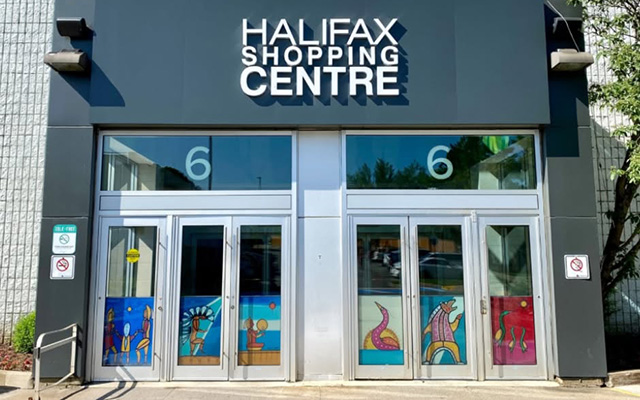
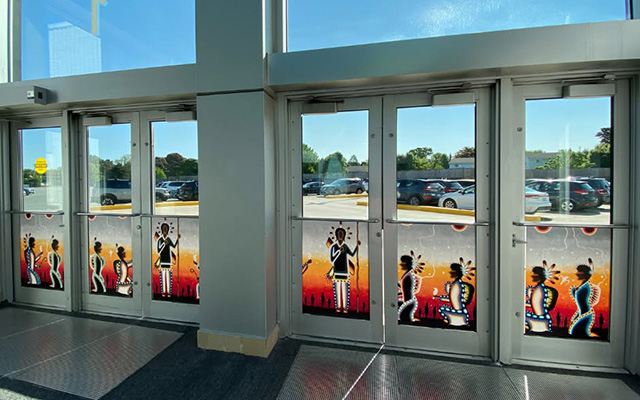
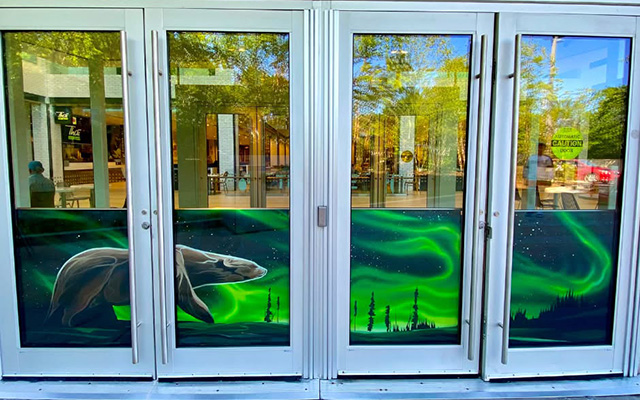
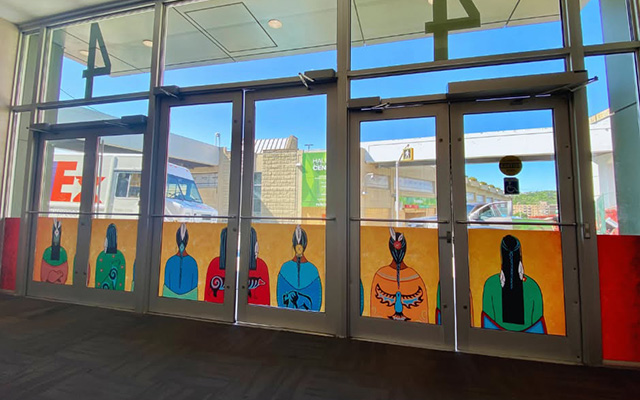
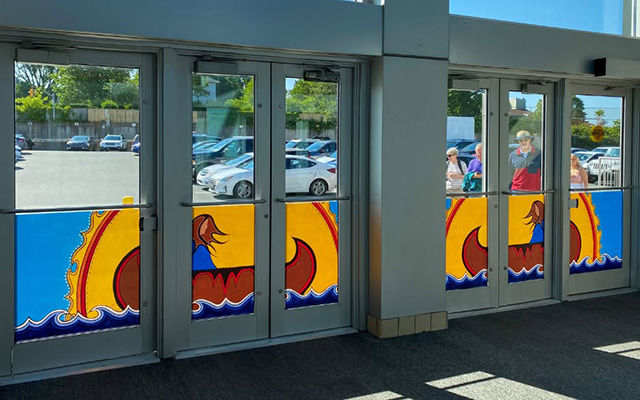
In 2023, Friends United collaborated with Halifax Shopping Centre in Halifax, Nova Scotia, to bring Indigenous artwork into one of the region’s busiest public retail spaces.
Large-scale reproductions of Indigenous artwork were installed across several shopping centre entrances during Indigenous History Month and in connection with the 2023 North American Indigenous Games in Halifax. The project extended beyond the physical installations through the shopping centre’s digital channels, increasing the visibility of the participating artists and their work.
Participating artists included David Brooks, Gordon Fiddler, Jasyn Lucas, Loretta Gould and Amanda Julian, whose works were transformed into large-scale displays across several shopping centre entrances.
By integrating Indigenous art into entrances and other highly visible public areas, the collaboration brought the artwork directly into an everyday environment encountered by shoppers, employees and visitors.
Indigenous Art at the Halifax Chamber of Commerce
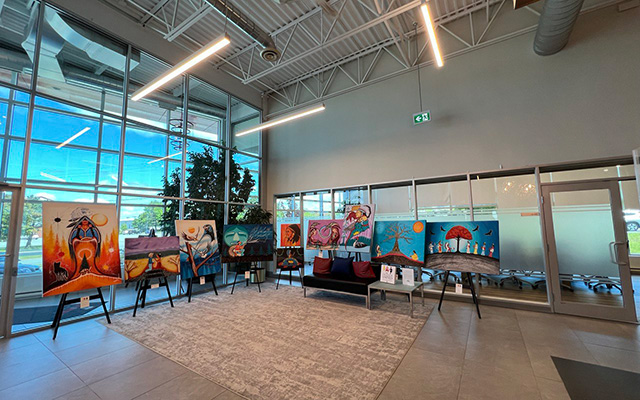
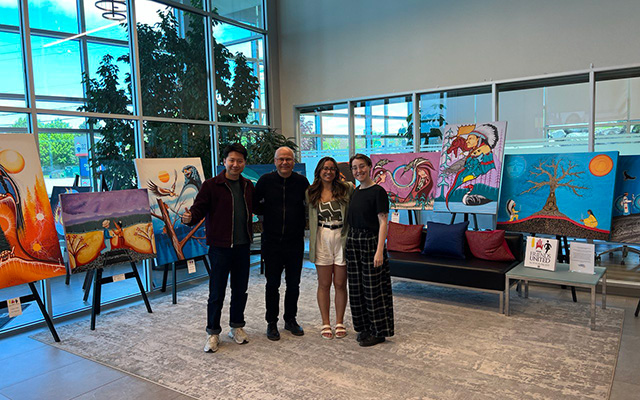
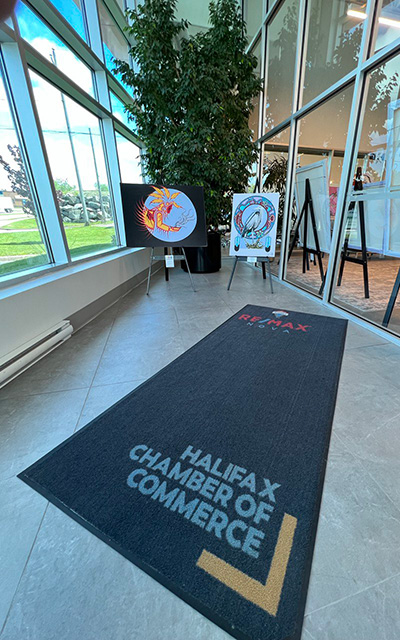
Friends United has developed an ongoing relationship with the Halifax Chamber of Commerce in Halifax, Nova Scotia, including exhibitions, collaborative projects and participation in Chamber events over several years.
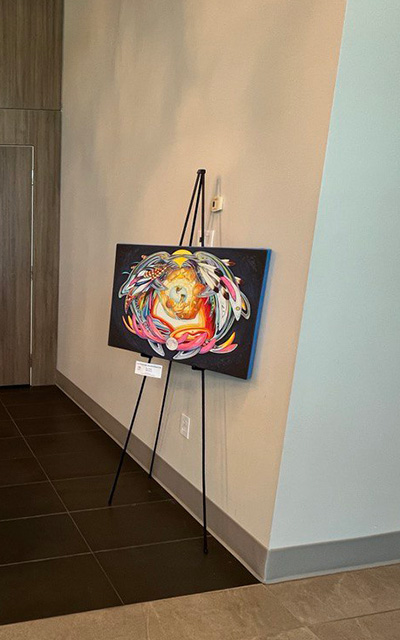
As a member of the Halifax Chamber of Commerce, Friends United has an established connection with the local business community. Indigenous artwork has been displayed within the Chamber’s offices, where staff, members and visitors encounter the work as part of the Chamber’s everyday professional environment.
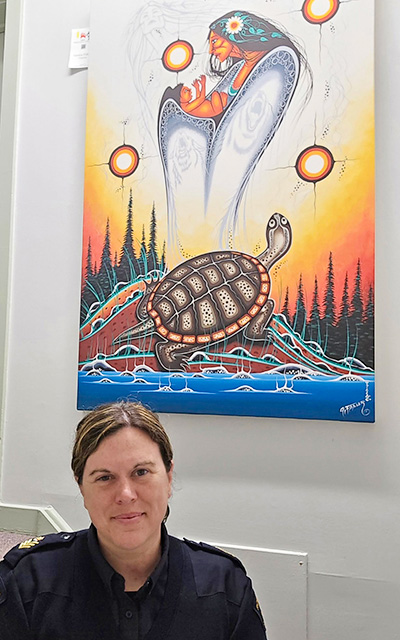
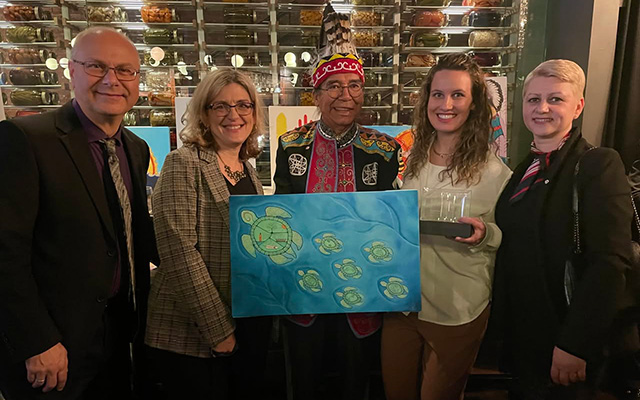
The collaboration has also extended into Chamber events. At the 25th Halifax Business Awards in 2024, Friends United supplied Indigenous works of art for the finalists. Commissionaires Nova Scotia later acknowledged receiving “Spirit Of The Turtle” by Loretta Gould as part of that initiative.
Through these exhibitions and projects, Indigenous art becomes part of a setting where businesses, organizations and community leaders regularly meet, creating another point of connection between Indigenous artists and the wider Halifax business community.
This ongoing relationship also forms part of Friends United’s broader outreach and community connections.
Learn more about Mindy Eva Ouellet
Learn more about Loretta Gould
Additional Public & Institutional Locations
Friends United Indigenous artwork can also be found in a range of other public, institutional and professional settings across Nova Scotia.
Examples include Access Nova Scotia and the Civic Centre in Port Hawkesbury, as well as other government offices, law firms and professional workplaces. These additional placements extend the presence of Friends United artists into many different parts of public and professional life.
The projects featured on this page therefore represent only part of the wider network of locations where Friends United artwork can be encountered across the province.
Art as Part of Everyday Places
From airports and courts to government offices, workplaces and public gathering spaces, these projects place Indigenous art within environments that people encounter as part of everyday life.
Each setting is different, but together they reflect Friends United’s continuing work with Indigenous artists and partner organizations across Nova Scotia.