David J. Brooks – Traditional Mi’kmaq and Woodland Art

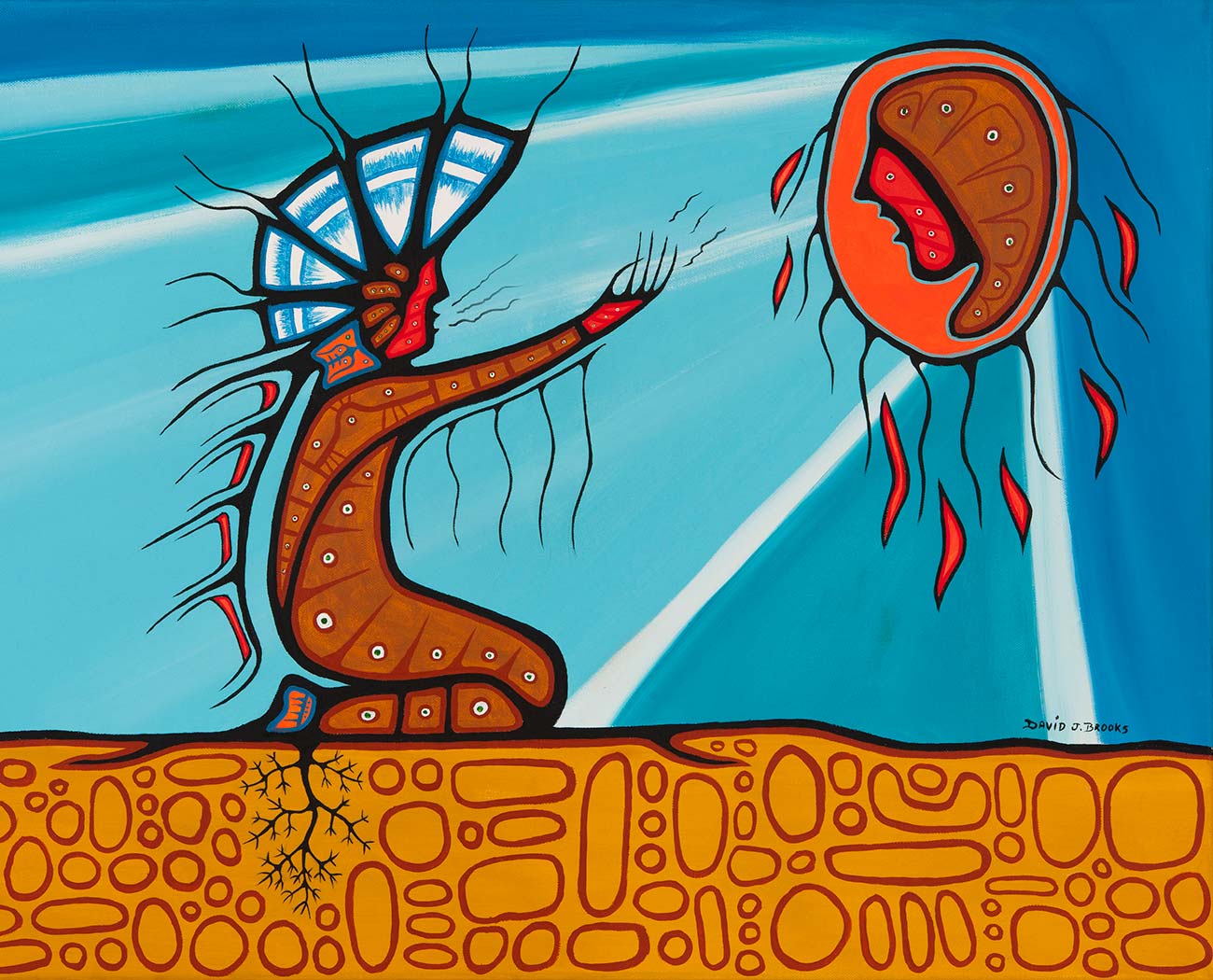
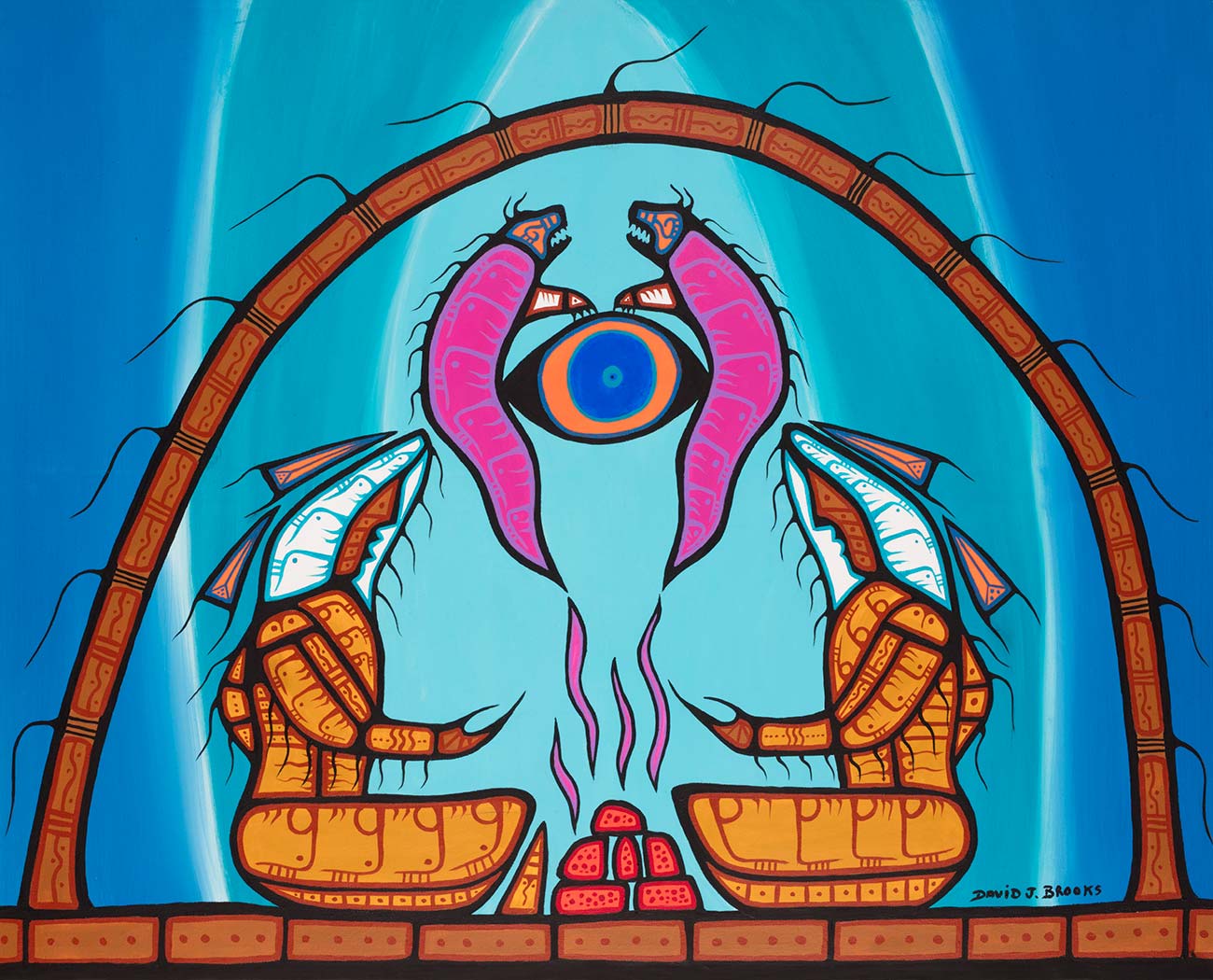
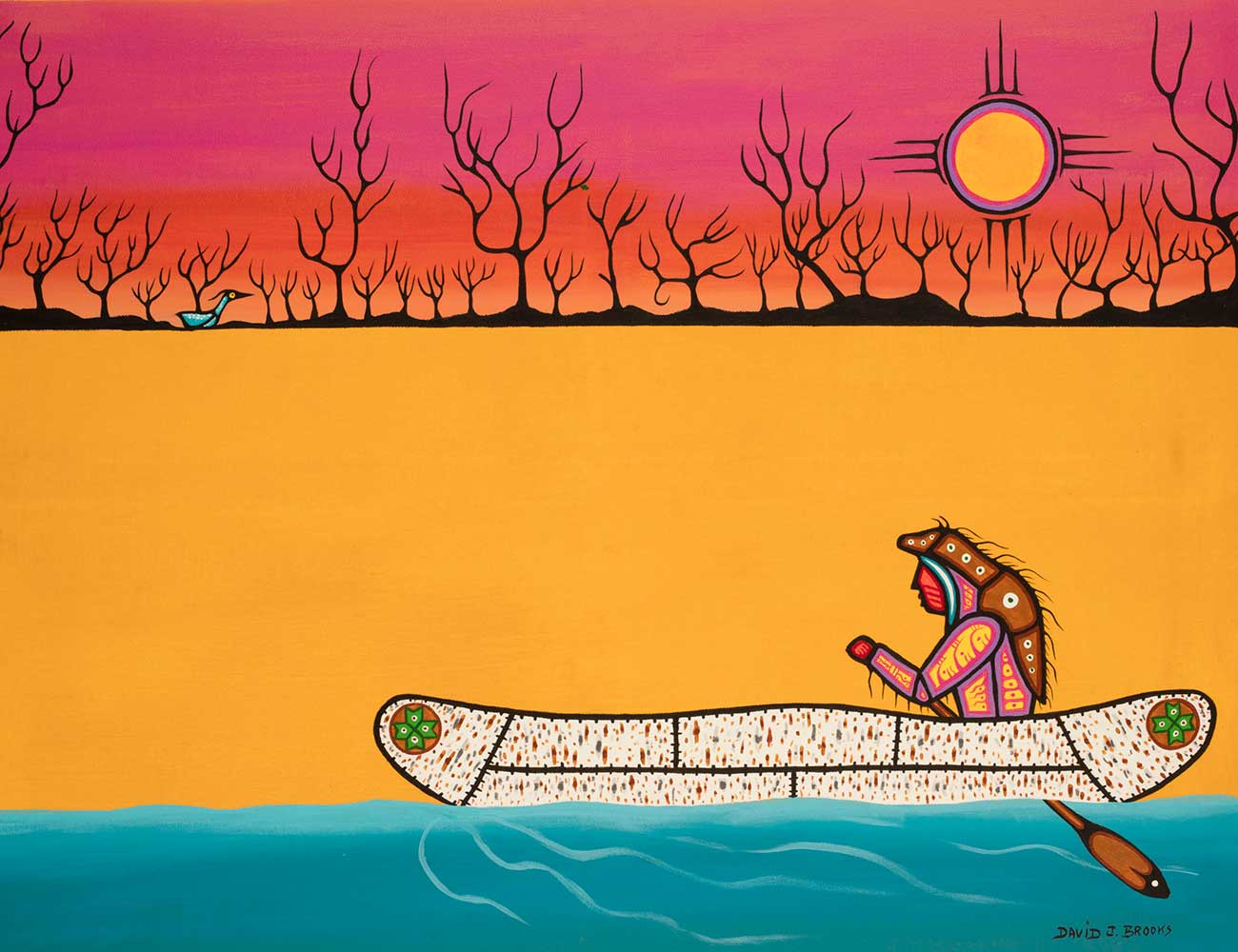
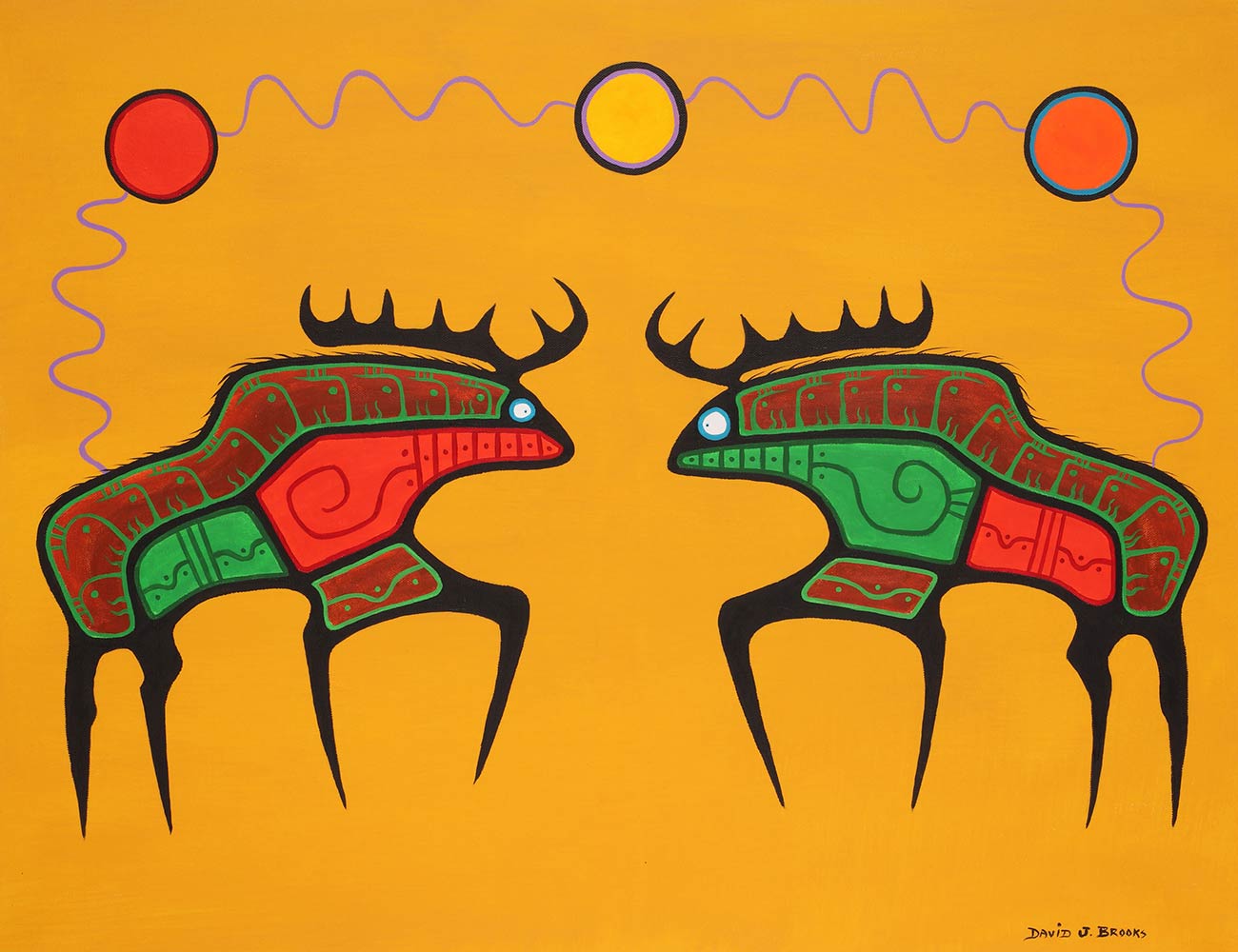
David J. Brooks was a Mi’kmaq artist from Indian Brook, Nova Scotia, whose traditional paintings were shaped by Eastern Woodland art and the artistic knowledge he encountered throughout his life. His work brings together stories, spiritual themes, community life, and his own distinctive visual language.

This page presents a selection of his traditional works. His later modern paintings are featured separately on the David J. Brooks Cubism page.

About David J. Brooks

Portrait of David J. Brooks, Indigenous artist featured by Friends United.

1950–2014

David was born August 1950 in Truro, Nova Scotia. He was raised and lived in Indian Brook, Nova Scotia. Both of his parents were gifted Mi’kmaq artists. His mother was gifted with making birch bark flowers. His father was gifted also and was a great carver. David didn’t take art seriously until he resided in Toronto in the early 1980s and met New Brunswick artist Phillip Young, who had studied at Vesper George School of Art and at the School of the Museum of Fine Arts. Both exhibited eventually in Canada and the U.S. In Toronto, Young watched Brooks do a little painting of a girl sitting down and burning sweet grass in a bowl with elders’ faces in the smoke. Phillip liked the painting and inquired: ‘Where did you go to art classes?’ He purchased Brooks’s painting and showed him, amongst other things, how to stretch canvases. David J. Brooks started to meet other native artists in Toronto and they began to paint. There was one big melting pot of native artists and each one had something to contribute. The style he chose was Ojibwa, because it is Eastern Woodland. What eventually influenced him were primarily Woodland and Haida style. He was not of Haida origin, but he recall what the Haida taught him. In 2008 David Brooks and Rolf Bouman met for the first time. David had almost stopped painting as he was discouraged by the conduct of many galleries who did not pay him fairly or at all. Rolf encouraged him to paint full time again, as he did until he passed away. Approximately 3 years prior to his death David developed a completely different and modern style, which is very unique and Rolf Bouman encouraged him to do so by purchasing all paintings, which David produced. David Brooks passed away on May 23, 2014. Before he passed away in 2014, he was an active artist/member of the Friends United initiative. David was a truly passionate Artist who loved his profession.

(Some Exhibitions Throughout David’s Early Years)

1984: Black Stone Gallery, Toronto Ontario
1984: Accent Gallery, Ottawa Ontario
1985: Atlantic Region Indian Art Juried Exhibition, Manuge Gallery
1986: Manuge Gallery, Halifax Nova Scotia
1987: Maritime Native Artisans Cooperative, HalifaxNova Scotia
1987: Painting For Public Works Canada (poster)
1990: Street Smart Art, Gottingen Street Halifax Nova Scotia
1990: Spirit Worlds,Sandra Carter Gallery, Halifax Nova Scotia
1990: 2 Murals On Front Of Mic Mac Friendship Centre, Gottingen Street Halifax Nova Scotia
1991: Painting For Statistics Canada
1991: Murals For Indian Brook Community Centre

David was the first Mi’kmaq Artist to have his artwork collected by The Art Gallery of Nova Scotia. One of David’s paintings is the logo for Treaty Education. Some of David’s art is featured as permanent display at the Art Gallery of Nova Scotia.

David has done numerous other art projects throughout his life, he was also a sculptor/carver. He carved different kinds of rock and wood, along with antlers. David’s art was also displayed on the covers of Mi’kmaq History Books.

Traditional Paintings by David J. Brooks

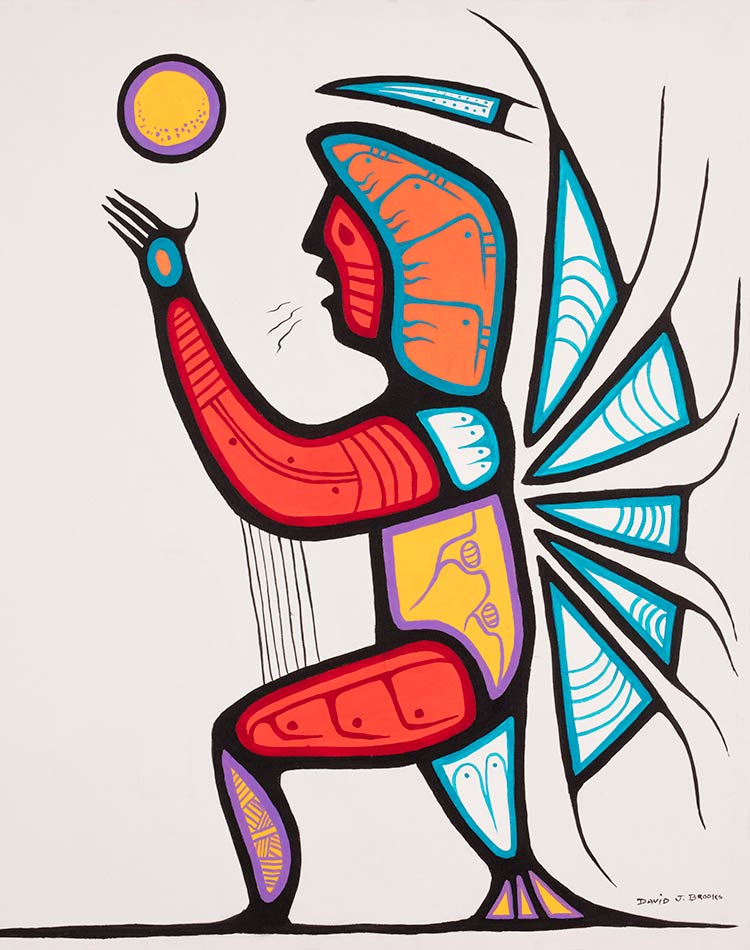
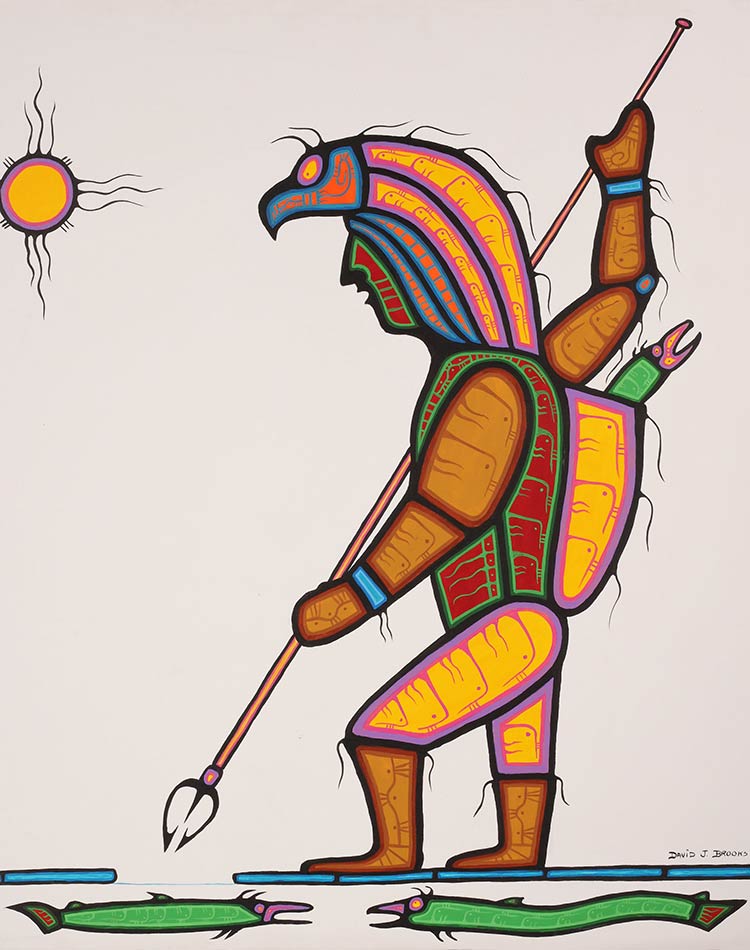
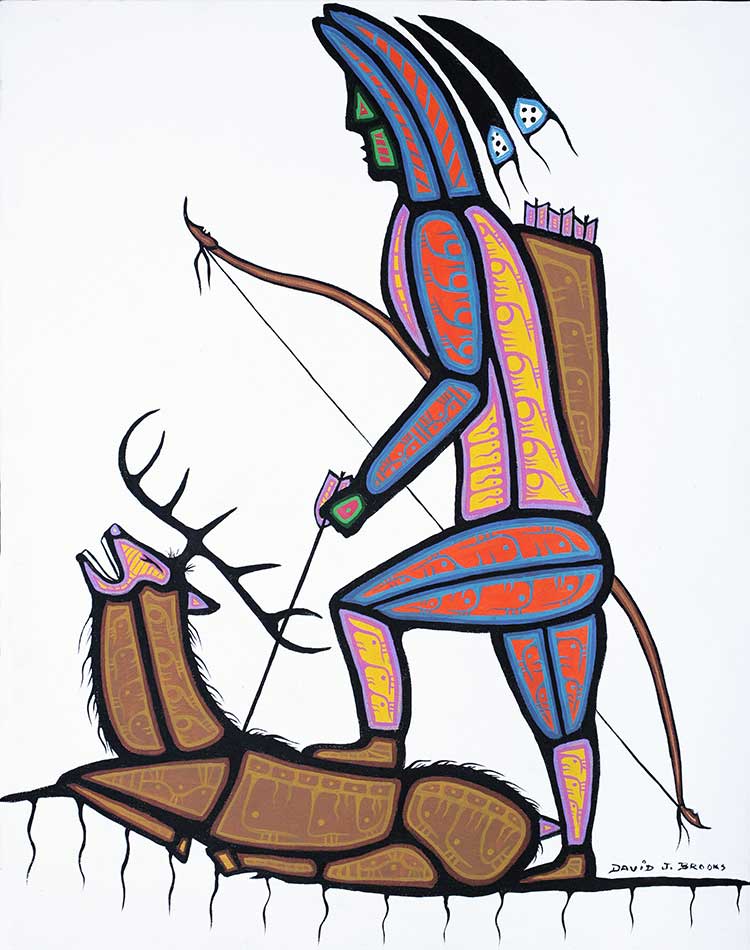
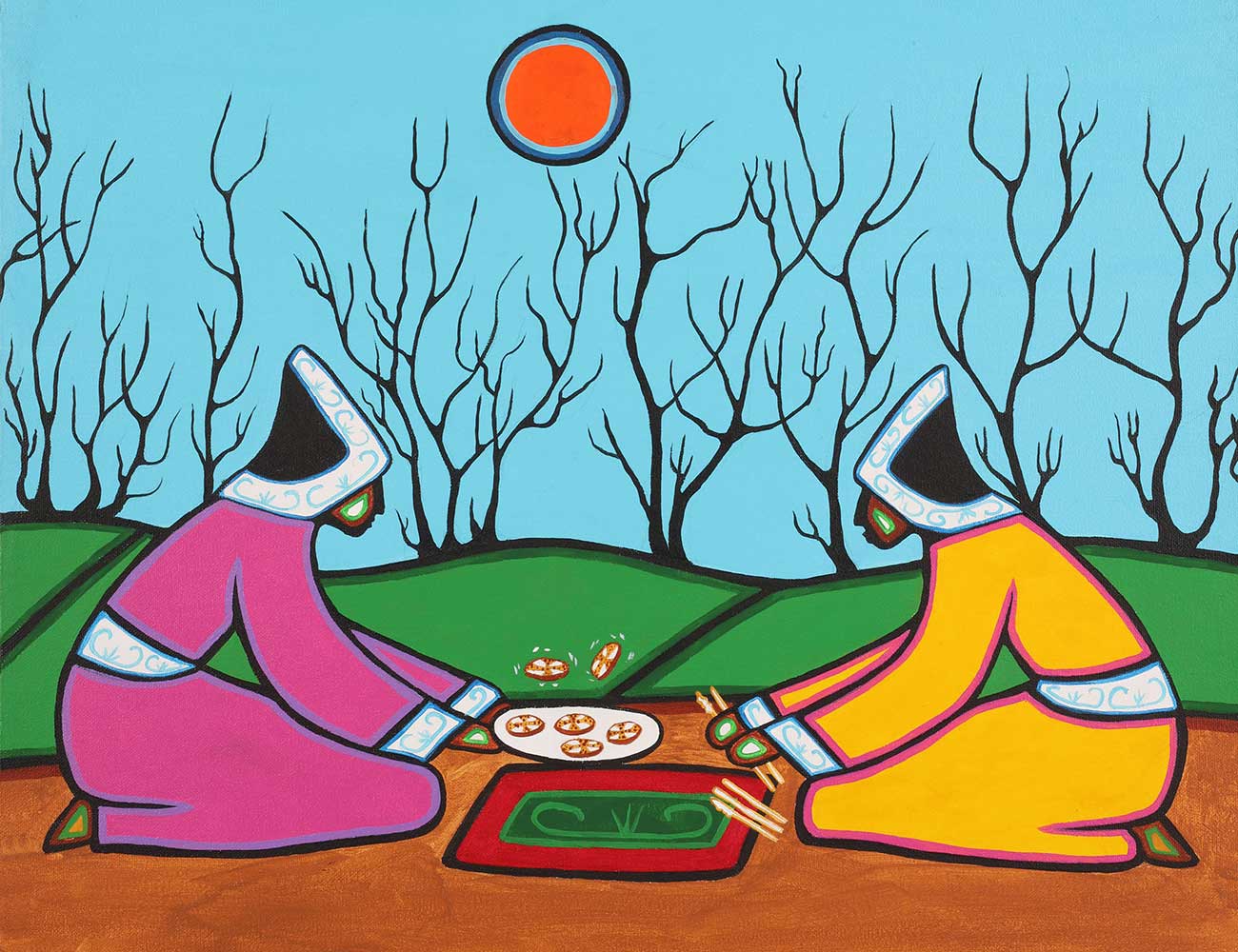
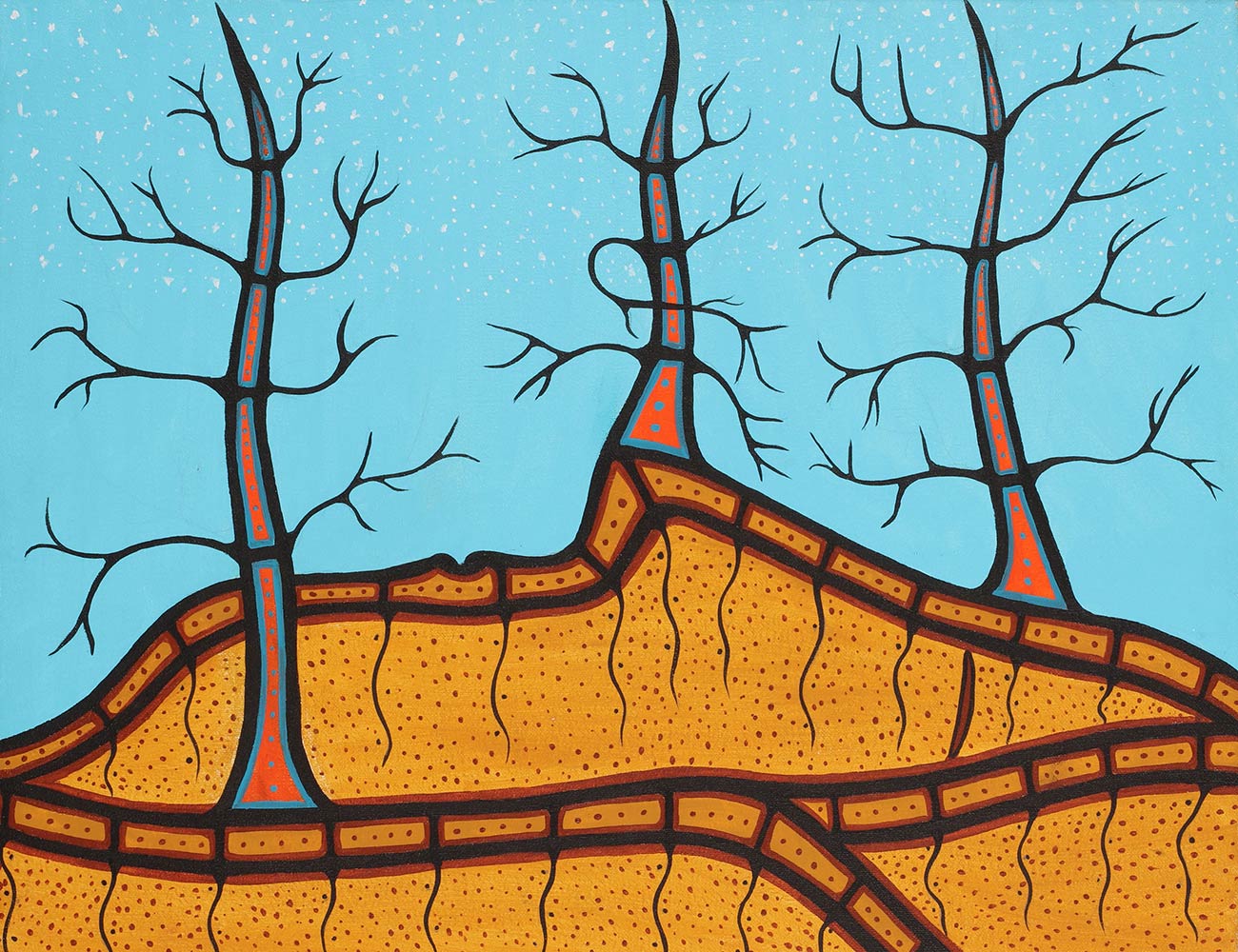
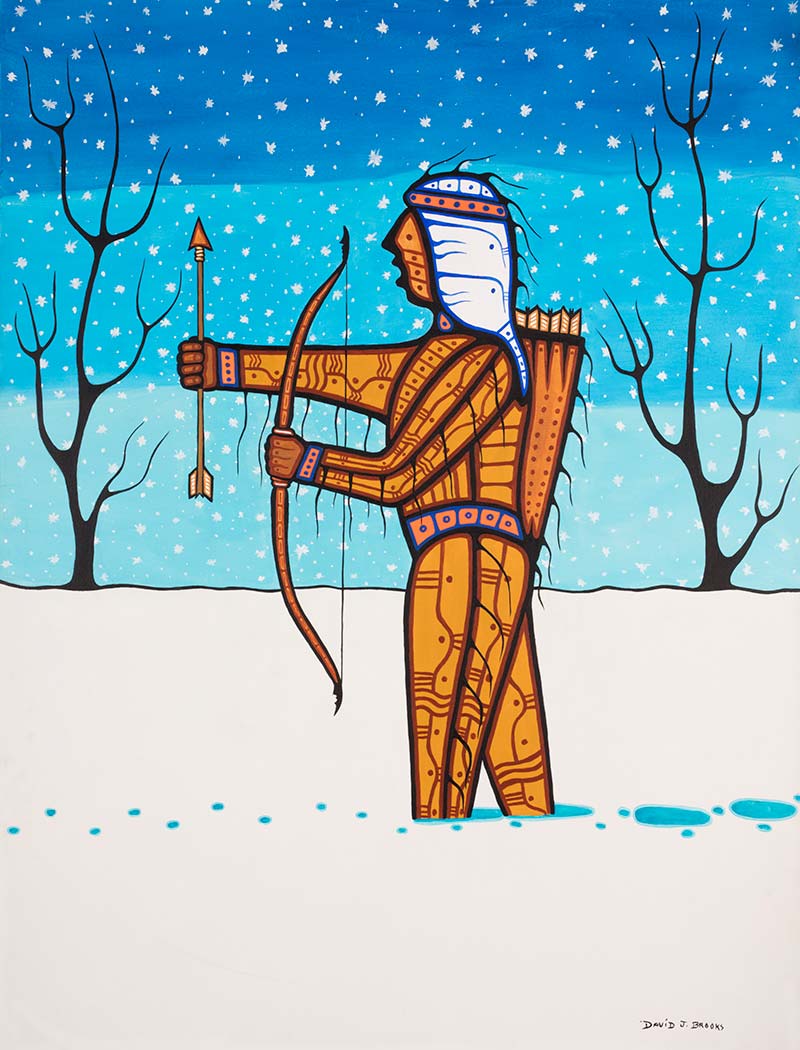
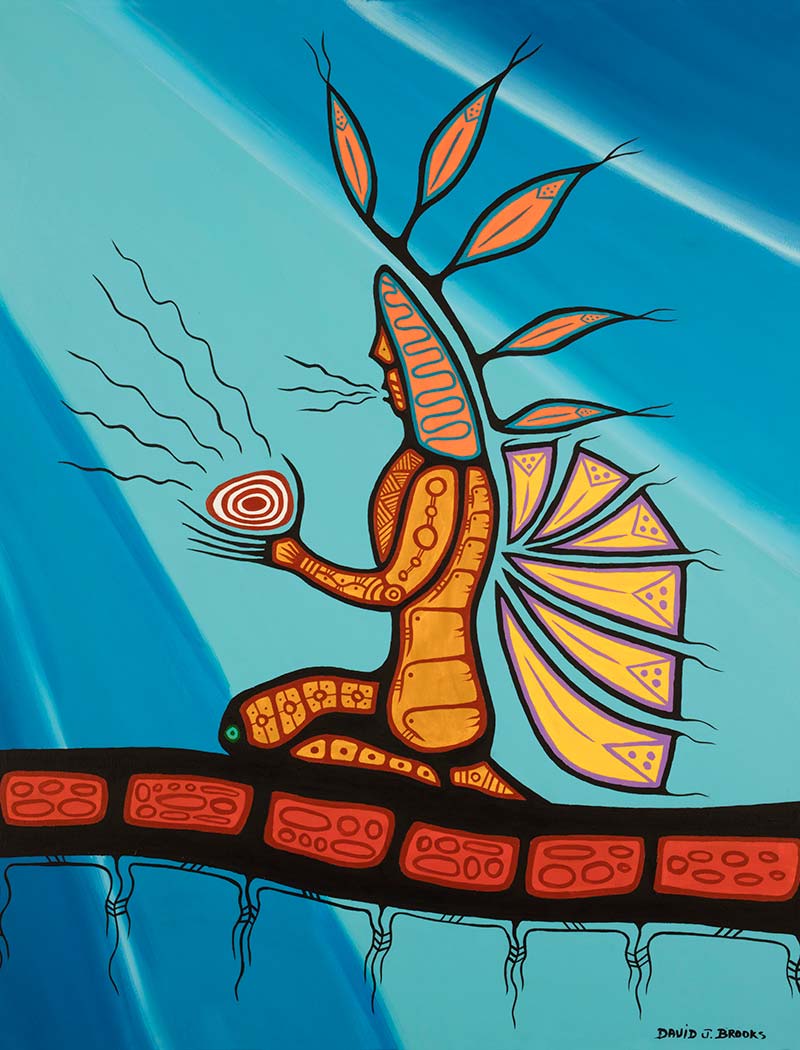
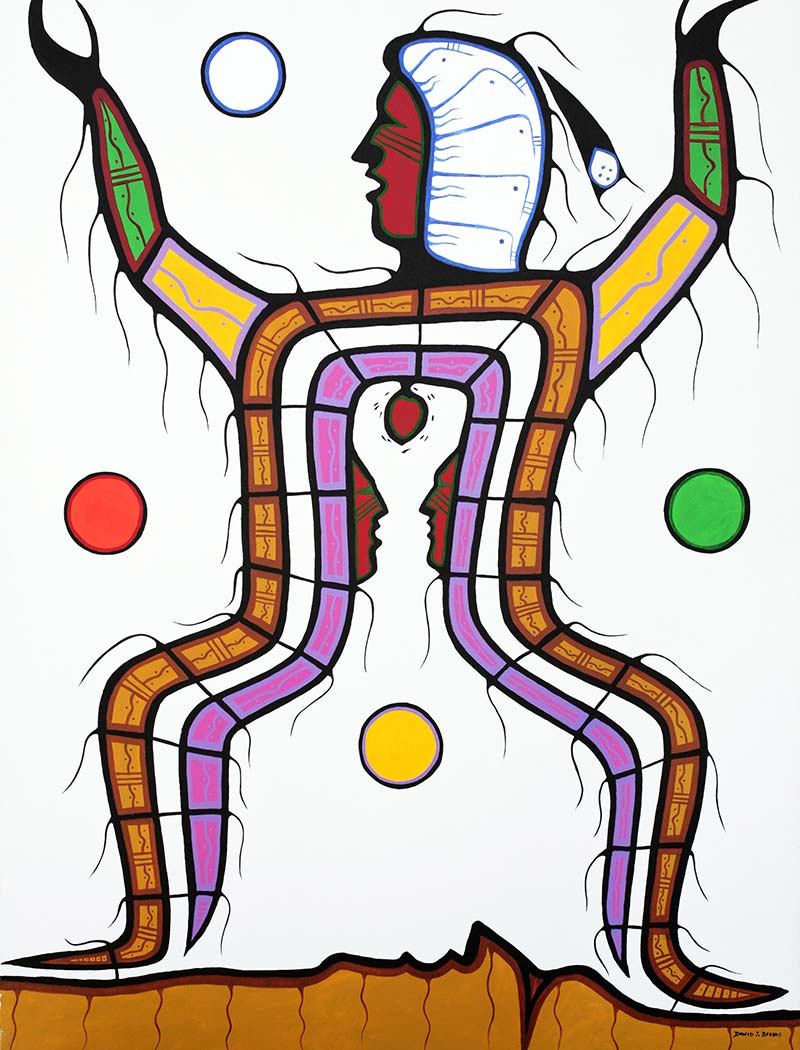
This gallery presents a selection of traditional paintings by David J. Brooks. The works reflect his engagement with Mi’kmaq stories, spiritual experience, ceremony, relationships with the land, and aspects of community life.

His visual approach was influenced by Eastern Woodland art and by artistic knowledge shared among Indigenous artists he met during his years in Toronto. While these influences helped shape his work, David developed an individual style grounded in his own experiences and artistic journey.
Work and Legacy

David J. Brooks built a wide-ranging artistic practice that included painting, carving, sculpture, murals, and public art. His work appeared in exhibitions, community spaces, publications, and cultural projects, and his paintings became part of important public and private collections.

His artistic legacy is closely connected to both Mi’kmaq cultural expression and his willingness to learn from other Indigenous artists. Eastern Woodland imagery remained an important influence, while his experiences in Toronto introduced him to a broader community of artists and artistic approaches.

David became part of the Friends United initiative after meeting Rolf Bouman in 2008. At a time when he had become discouraged by his experiences with galleries, the relationship helped him return to painting more actively.

Friends United continues to preserve and present examples of both his traditional work and the modern style he developed later in life. Explore David J. Brooks’ later cubist paintings and the modern artistic direction he developed during the final years of his life.

David J. Brooks’ artistic legacy also continues through his daughter, Chelsea Brooks, who has developed her own artistic practice. Her Friends United artist page presents her work and adds another dimension to the Brooks family’s artistic story.

Explore More Artists…